
Inclusion, Early Intervention, and the Future of Employment for Autistic Adults: In Honour of Autism Acceptance Month
From the moment my son Joshua was diagnosed as autistic, I made it my mission to ensure he had every opportunity to thrive, communicate, and engage with the world around him. Early intervention played a crucial role in his development. Introducing him to music therapy, speech and language support, sound therapy, equine therapy, and cranial therapy for relaxation. Each of these therapies contributed uniquely to his growth, helping him access the school curriculum, develop his communication skills, and confidently navigate daily life.
Basketball, an activity often overlooked in therapeutic settings, became another essential tool for improving Joshua’s hand-eye coordination and motor skills. By weaving together these therapies and activities, we laid a strong foundation for Joshua’s ability to express himself, connect with others, and pursue his passions in music, art, and technology.
The Employment Challenge for Autistic Adults
Despite Joshua’s remarkable progress and his clear talents, I quickly realized that employment opportunities for autistic adults remain severely limited. Too many highly skilled, capable autistic individuals struggle to secure meaningful work due to a lack of understanding, accommodations, and inclusive hiring practices. In 2022, MP Robert Buckland raised this issue in Parliament, challenging then-Prime Minister Rishi Sunak on what was being done to increase employment opportunities for autistic adults. While the UK government acknowledged the problem, real, systemic change has been slow. More recently, the government commissioned The Buckland Review of Autism Employment, released in February 2024. This independent review set out 19 recommendations to help create more inclusive workplaces, raise employer awareness, and encourage the hiring of autistic individuals. It was a significant step forward and recognized the incredible untapped potential within the autistic community.
However, the backdrop of these developments is complex. In early 2025, the government also proposed £5 billion in cuts to health-related disability benefits, while pledging £1 billion for new back-to-work schemes. Though framed as empowering reforms, many disability advocates have expressed concern that these changes could result in reduced support for vulnerable individuals, making it even harder for some autistic adults to navigate the workforce. These contradictions highlight the ongoing tension between policy and practice. On one hand, the recognition of neurodiversity in employment is growing. On the other, access to sustained support remains fragile.
This critical issue is something I explore in depth in my book, Autistic: Leaping Over Walls While Living with Autism. Through Joshua’s experiences and those of many others, I highlight the systemic barriers autistic adults face when trying to enter the workforce, and the urgent need for society to embrace neurodiverse talent—not just during Autism Acceptance Month, but every day of the year.
Creating Opportunities: Inclusion in the El’Rog Brand
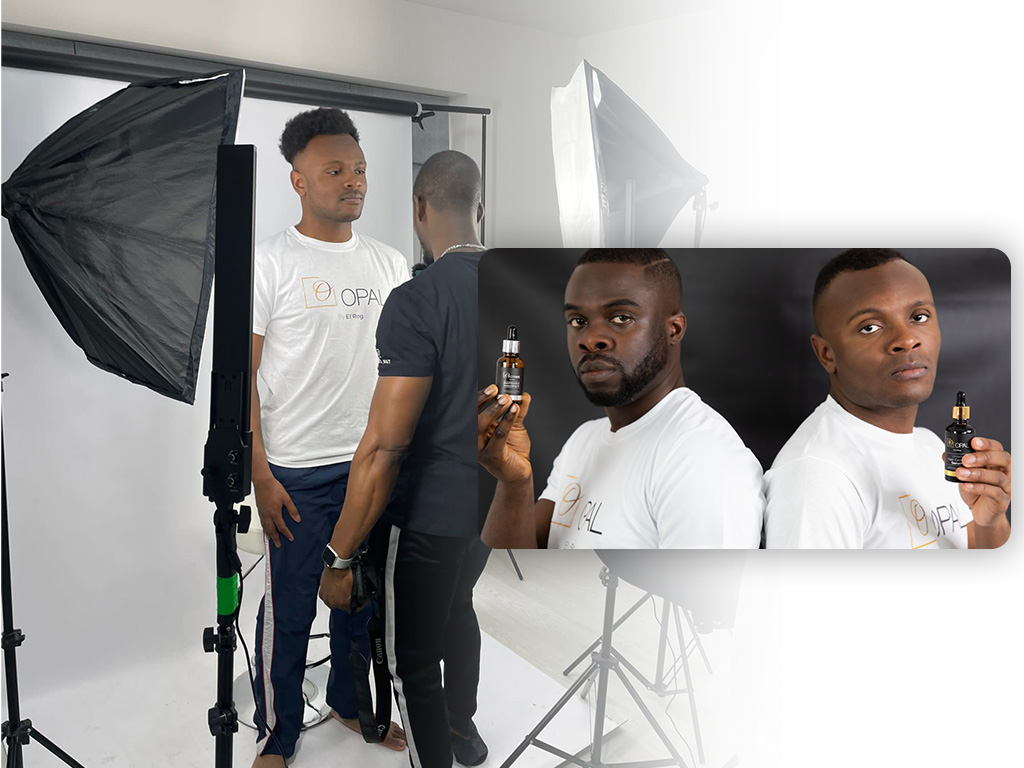
While navigating these systemic obstacles, I have actively sought ways to create opportunities for Joshua and other autistic adults. One of my proudest moments was including him in my work as a model for the El’Rog brand, a premium hair and beauty company. The El’Rog brand was born out of personal challenges—the stress of the COVID-19 pandemic, homeschooling Joshua while supporting Christian through his A-levels, and my own experience of perimenopause. During that time, my sons became the first testers of our products, giving invaluable feedback on their effectiveness.
When we expanded the brand’s reach through commercials, Joshua became one of our featured models, working alongside other professionals. He took direction beautifully, thrived in front of the camera, and enjoyed the creative process. With the support of a compassionate and understanding team, Joshua was able to follow instructions and contribute meaningfully to the campaign. His involvement not only showcased his ability but also demonstrated that autistic individuals can excel in professional environments when given the right support.
Beyond Joshua, we also included Chris Israel, another autistic adult, in our commercials, further reinforcing the importance of representation and opportunity. By doing so, we hoped to challenge misconceptions about autism and employment, showing that autistic individuals can be valuable, talented, and professional contributors to various industries.
What More Needs to Be Done?
While small steps like our inclusive modeling campaigns help, the broader issue remains unresolved. The government must move beyond mere discussion and implement real, tangible employment reforms for autistic adults, including:
- Accelerating the implementation of the Buckland Reviewrecommendations.
- Introducing stronger incentives for employersto hire and accommodate autistic employees.
- Creating specialized vocational trainingtailored to autistic individuals’ strengths, including technology, arts, and creative industries.
- Ensuring Access to Workgrants are better publicized and easily accessible.
- Promoting greater representation and awarenessin mainstream media to challenge biases against neurodiverse individuals.
- Expanding career support programsthat help autistic adults transition from education to employment.
Employers also need to recognize that autistic individuals bring incredible skills—creativity, attention to detail, and deep focus in their areas of interest. Businesses like El’Rog are proving that inclusion is not just possible but beneficial to brands, consumers, and the workforce.
A Call for Change
Joshua’s journey has taught me that with early intervention, the right support, and access to opportunities, autistic individuals can thrive. But it shouldn’t be left to parents and small businesses alone to create these opportunities—governments, corporations, and society must step up. At El’Rog, inclusion is part of our DNA, and we will continue to advocate for meaningful change in employment for autistic adults. However, more systemic efforts are needed to ensure that every autistic individual has a fair chance to succeed—not just in specialized roles, but across all industries.
This Autism Acceptance Month, I urge policymakers, employers, and community leaders to reflect on what inclusion means—and how their actions (or inaction) impact lives. This issue is not just personal to me—it’s a nationwide and global challenge. That’s why I explore it in my book, Autistic: Leaping Over Walls While Living with Autism—to shed light on these realities and push for a more inclusive future.
The question now remains: What will the government, businesses, and society do next to ensure that autistic adults like Joshua are not left behind?
